


THE WEAVE GUIDE

WIRE TYPE
There are two main types of yarn: single-ply and two-ply.
Single-ply yarn is spun by machine (spinning loom). This is the first and most basic spinning step, yet it offers great precision for pattern creation.
Two-ply yarn is composed of two single-ply yarns twisted together. This process results in a softer and more resistant yarn, while also increasing the yarn's diameter for a more durable fabric.
Most of our poplin collection is made from two-ply yarn, a guarantee of durability.

TITRATION
The thread count or number
indicates the quality of the fabric based on the fineness of the thread, measured by the
length-to-weight ratio. Thus, the lower the count, the thicker the thread; the higher the count, the finer the thread.
For example:
- An 80/1 count (with /1 indicating single-ply thread) corresponds to a thick, durable fabric.
- A 120/2 count (with /2 indicating two-ply thread) indicates a fine, high-quality fabric.
A high count means a fine, light, silky, and soft thread, a guarantee of quality.
At Figaret, our fabrics have a count ranging from 80 to 140, ensuring exceptional quality.

Weaving
The first ingredient of a shirt, the fabric, determines its quality. The construction of the fabric creates the visual appearance of the shirt and dictates its use depending on the occasion or season.
Always composed of a warp (the threads running lengthwise in the weave) and a weft (the threads running crosswise), fabrics are recognizable and differentiated by varying interlacings between these horizontal and vertical threads.
While an infinite number of constructions exist, they most often fall into one of three main types of weave: plain (classic, chessboard-like), twill (compact and oblique), and satin (shiny because the weft is barely visible).
-
Canvas armor
Plain weave is the simplest weaving technique. The weft thread passes alternately under and over the warp thread, continuously, to form a regular and uniform weave.
Fabrics made with a plain weave are said to be "grained," because both sides are identical, with no distinction between front and back. Poplin is the perfect example: smooth, light, and resistant, it is ideal for making elegant and durable shirts. -
Twill Armor
Twill weave is distinguished by its oblique lines, created by the specific alternation of threads. The weft thread passes under one or more warp threads, then over a greater number of threads, or vice versa, thus forming an easily recognizable diagonal pattern.
Depending on the weave, twill can have a weft or warp effect, making the front and back of the fabric different. Flexible and durable, this type of fabric is ideal for shirts offering comfort, drape, and unique texture. -
Satin Weave
Satin weave, as its name suggests, produces fabrics with a satiny appearance, recognizable by their smooth and lustrous surface. The weaving is similar to that of twill, but with a single binding point per thread, distributed in a way that avoids the diagonal lines characteristic of twill.
This construction gives the fabric a fluid texture and a luminous finish, ideal for elegant and refined shirts.
DISCOVER ALL OUR WEAVES:
-
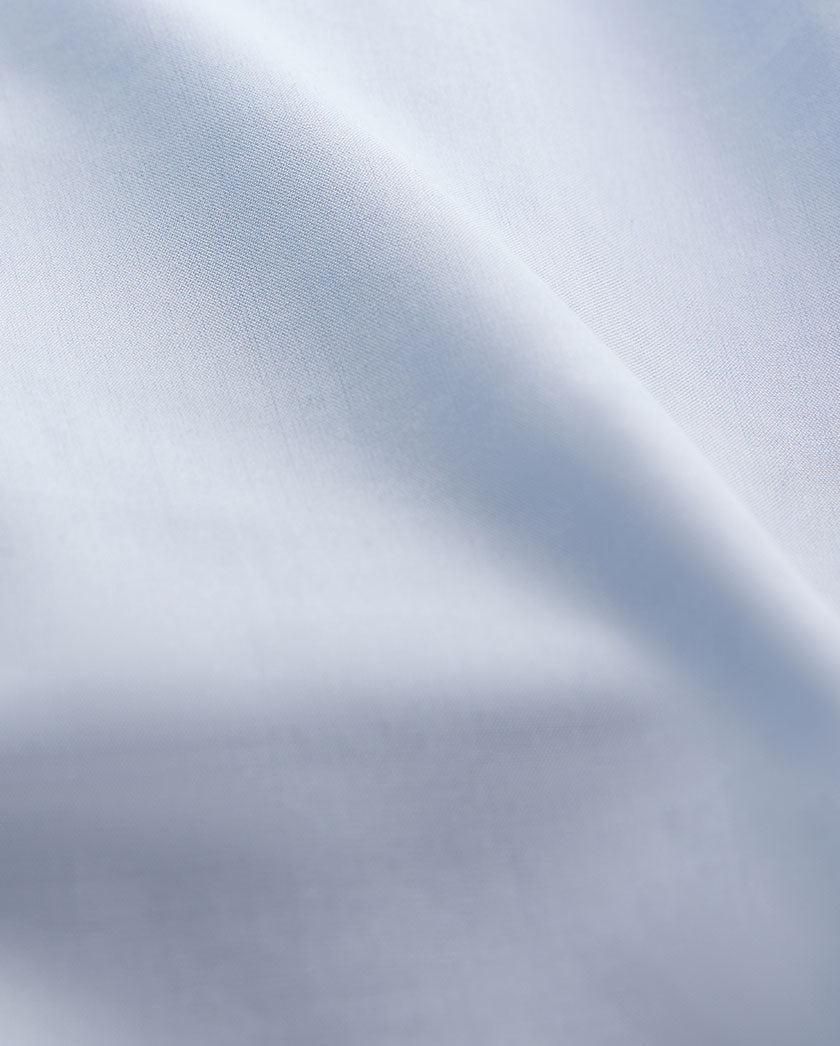
Poplin
See poplin shirtsCotton, wool, or silk — poplin is the classic and most widely used weave. Woven with a finer warp than weft, it offers a smooth and pleasant touch. Its tight, even structure ensures excellent quality, making poplin ideal for crafting elegant and comfortable shirts.
-
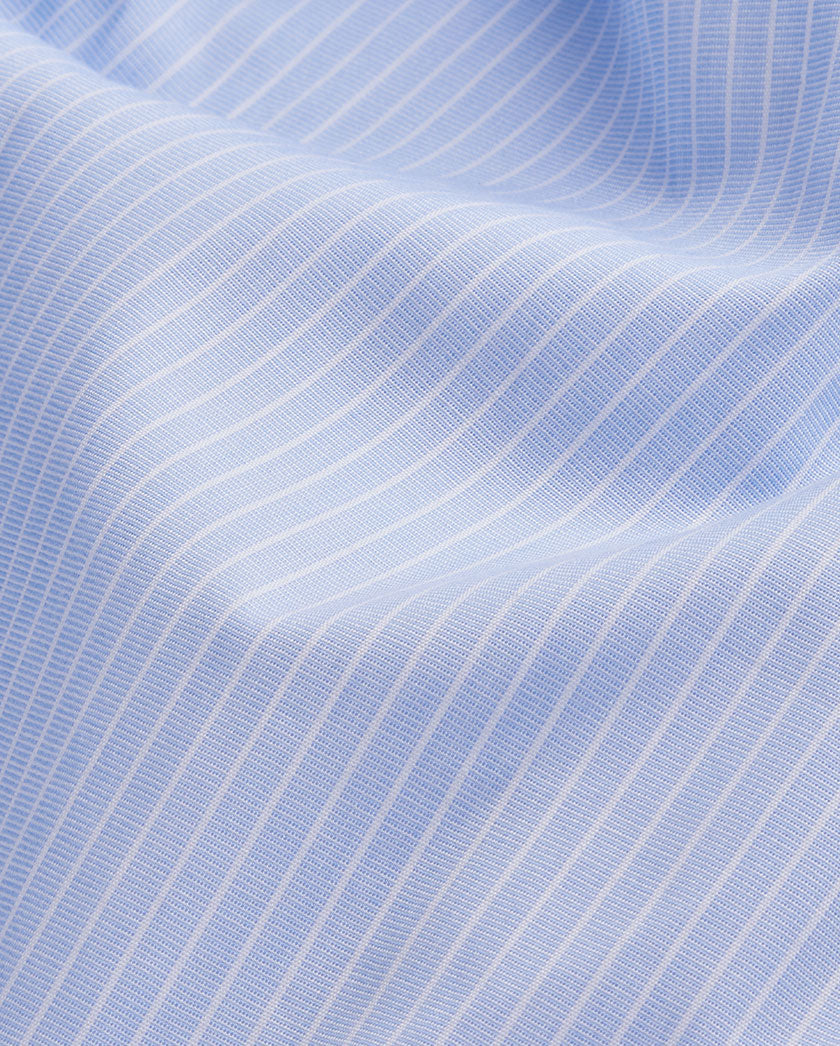
End-on-end
View end-on-end shirtsEnd-on-end (fil-à-fil) is a variation of poplin that uses two threads of different colors — one dark, one light — in the weaving process. The result is a light, solid-colored shirt with a subtle, mottled effect. End-on-end weaving makes it particularly ideal for a fresh, summery look.
-
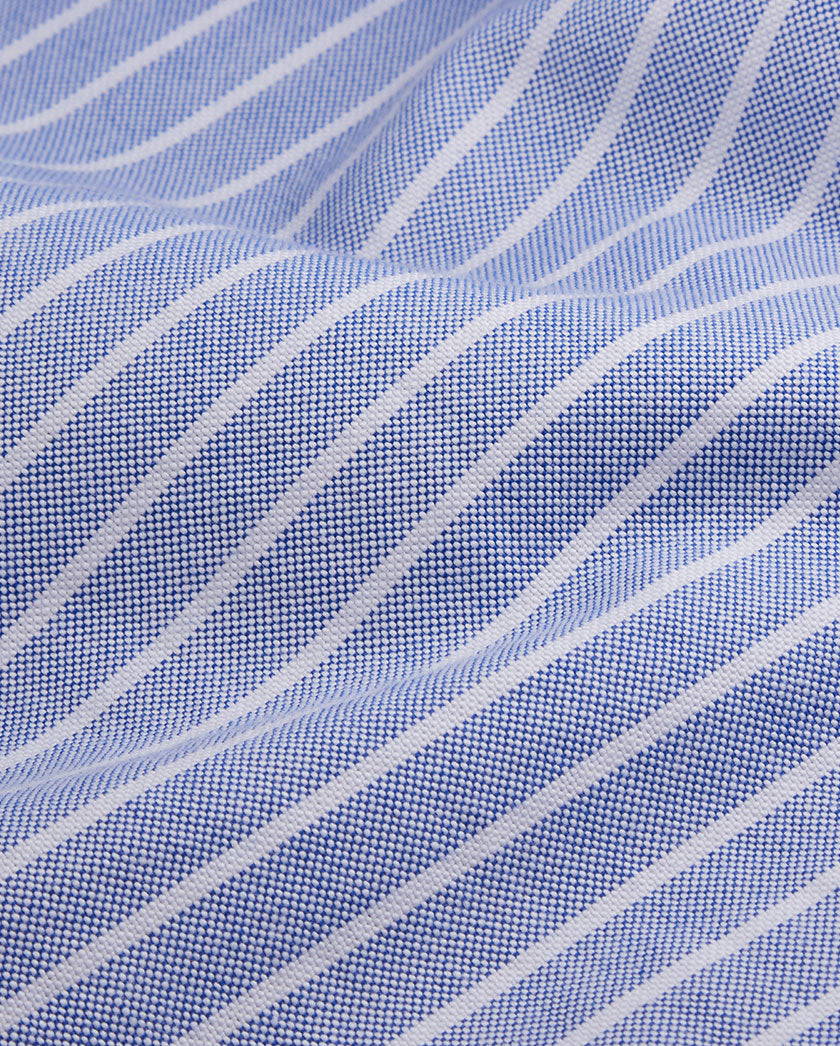
Oxford
See oxford shirtsOxford is a “grain” fabric with a slightly coarser weave than poplin. Typically, the weft yarn is colored while the warp remains white, giving the fabric its characteristic checkered appearance. Robust yet soft and easy to maintain, Oxford is ideal for casual shirts.
-
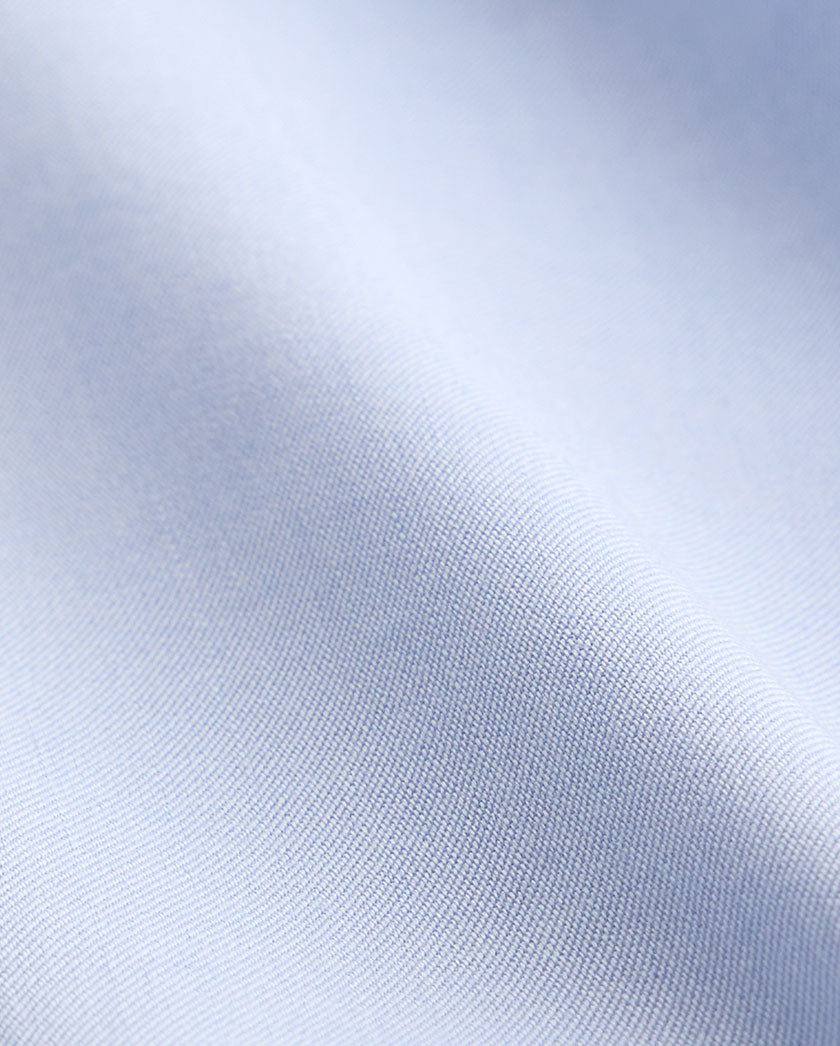
Twill
See twill shirtsTwill is distinguished by the diagonal lines created in its weave. Resistant and naturally crease-resistant, it is also the fabric used in the crafting of our denim shirts.
-
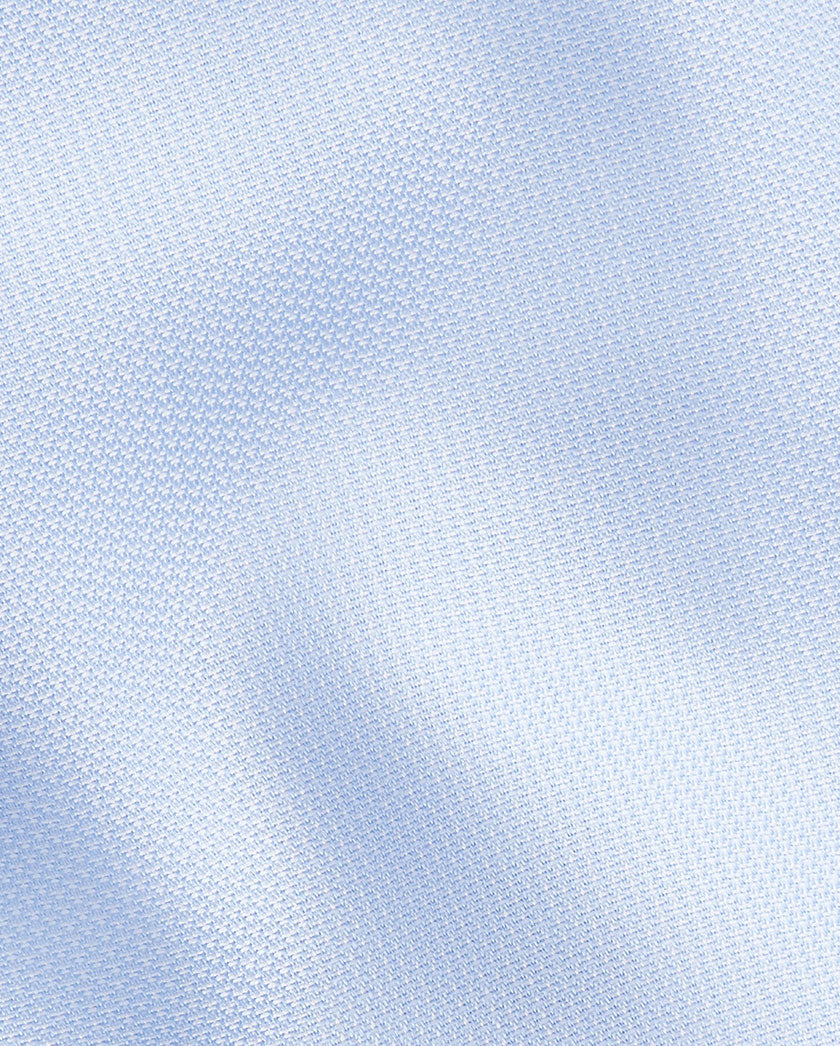
Dobby
See dobby shirtsDobby is a textured weave created by crossing different threads, making it the quintessential patterned fabric. Its subtle effect adds depth and elegance to plain shirts.
-
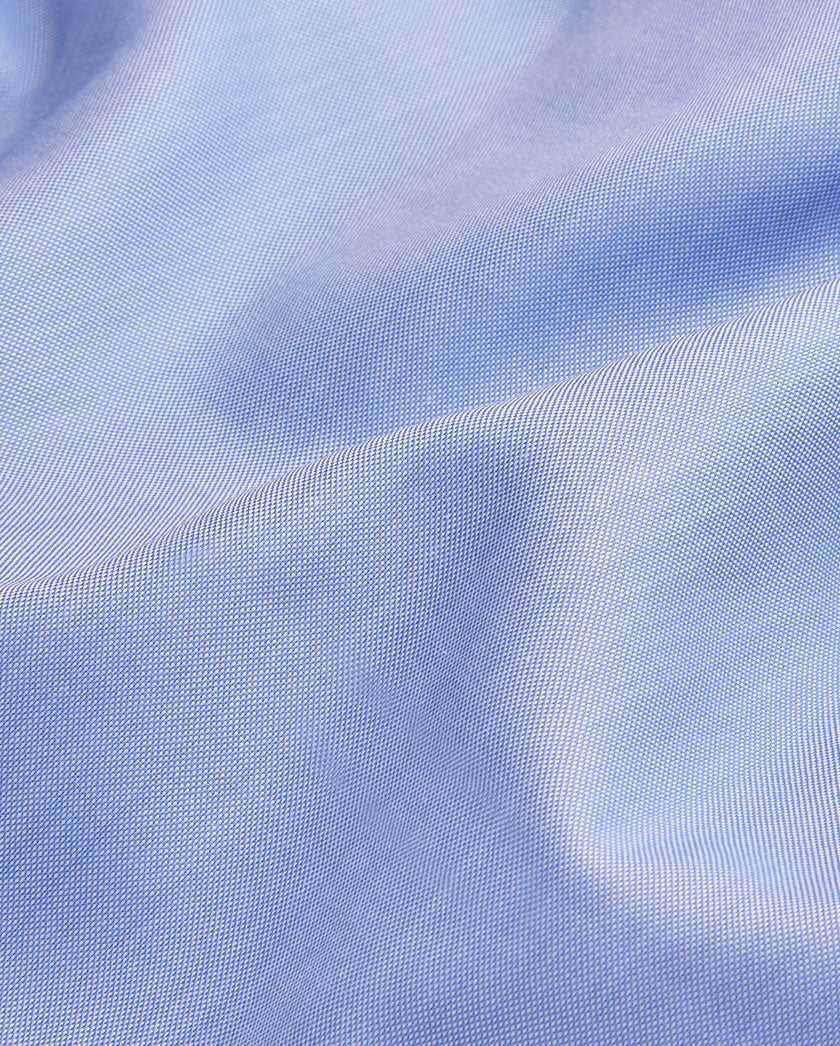
Pinpoint
View pinpoint shirtsThinner than Oxford and poplin, pinpoint is both supple and durable. Its distinctive weave — where the weft thread passes over two warp threads and then the next two — gives it a refined texture. Ideal for a casual shirt that remains elegant and polished.
-
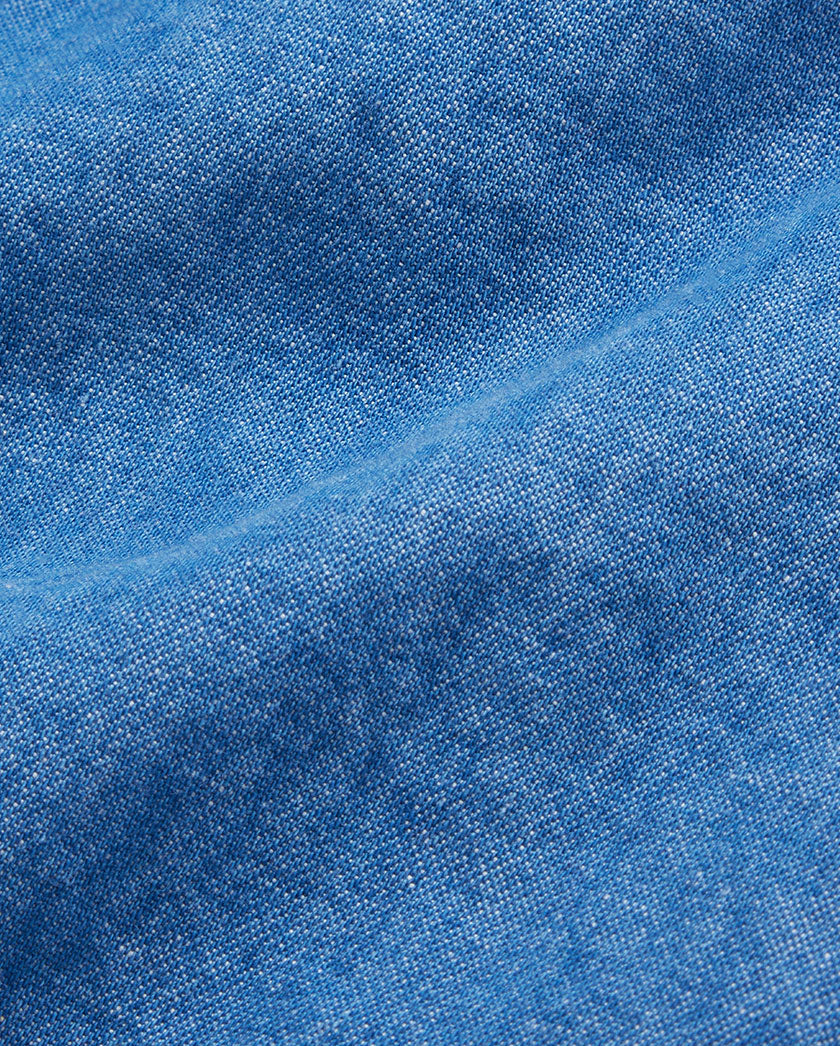
Denim
See denim shirtsOriginally used for trousers and known as “toile de Nîmes,” denim has become a staple for casual shirts. Dyed with indigo — historically called the “blue of Genoa,” which inspired the term “jeans” — this twill weave fabric is exceptionally durable and develops a unique, faded character over time as the indigo gradually wears away.
-
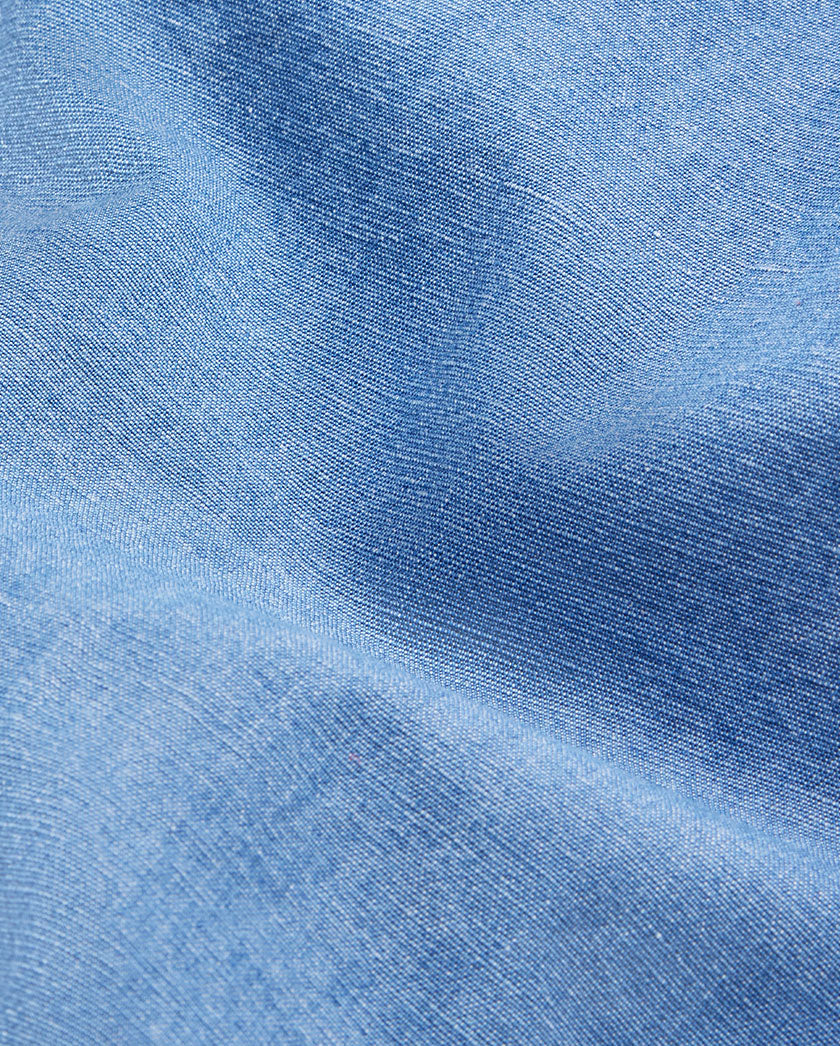
Chambray
See chambray shirtsChambray is a lightweight fabric woven in a plain weave, most often from cotton. Similar to end-on-end, it is made with a white or ecru weft and an indigo-dyed warp. Over time, the indigo develops a subtle patina, giving the fabric its casual, worn-in character.
-
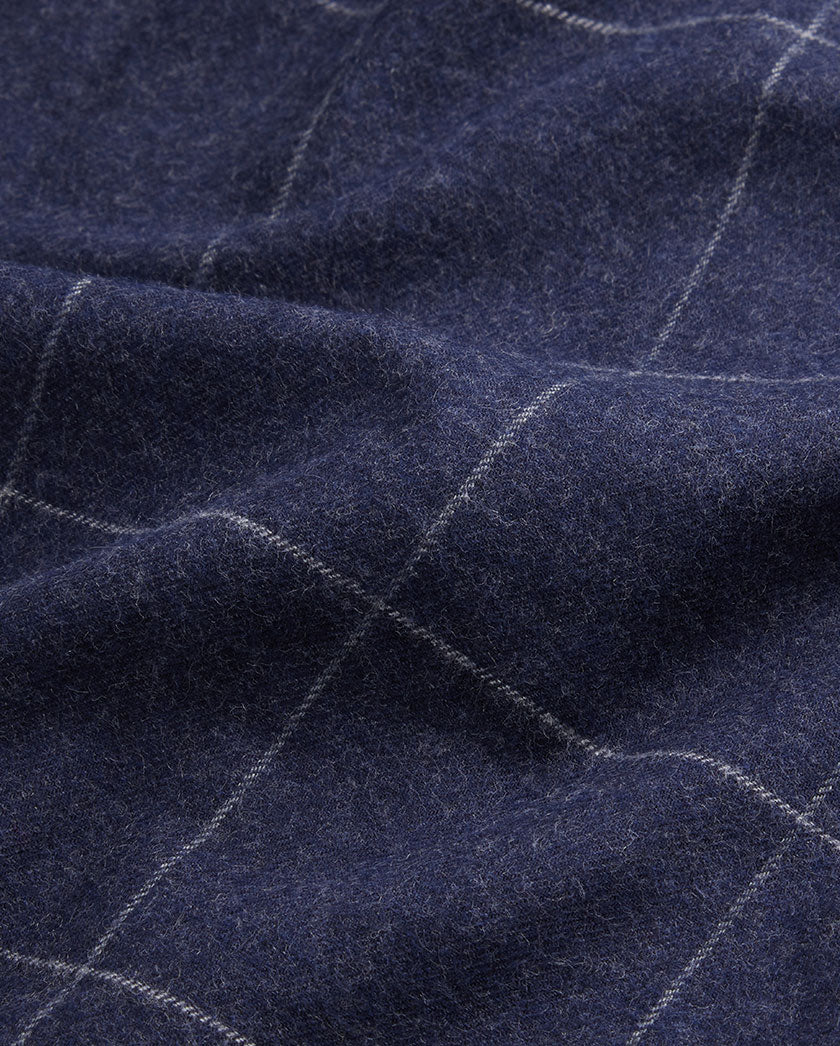
Flannel Weave
See flannel shirtsHistorically made of wool, flannel
is a so-called "brushed" fabric. Now mainly in cotton for shirts, it offers a fluffy appearance and a beautiful softness that are very popular in winter. On some models, we add cashmere for an even softer finish.
-

Selvedge
View selvedge shirtsA Japanese fabric with finished edges, traditionally reinforced with a colored selvedge. This finishing prevents fraying, making the fabric particularly durable. The selvedge is similar to classic denim.
-

Ripstop
Often used for technical fabrics (paragliding, kites, etc.), ripstop is defined by a grid-like structure that resists snags and tears. Sourced from trusted suppliers, it also gives our shirts a distinctive visual identity.


